
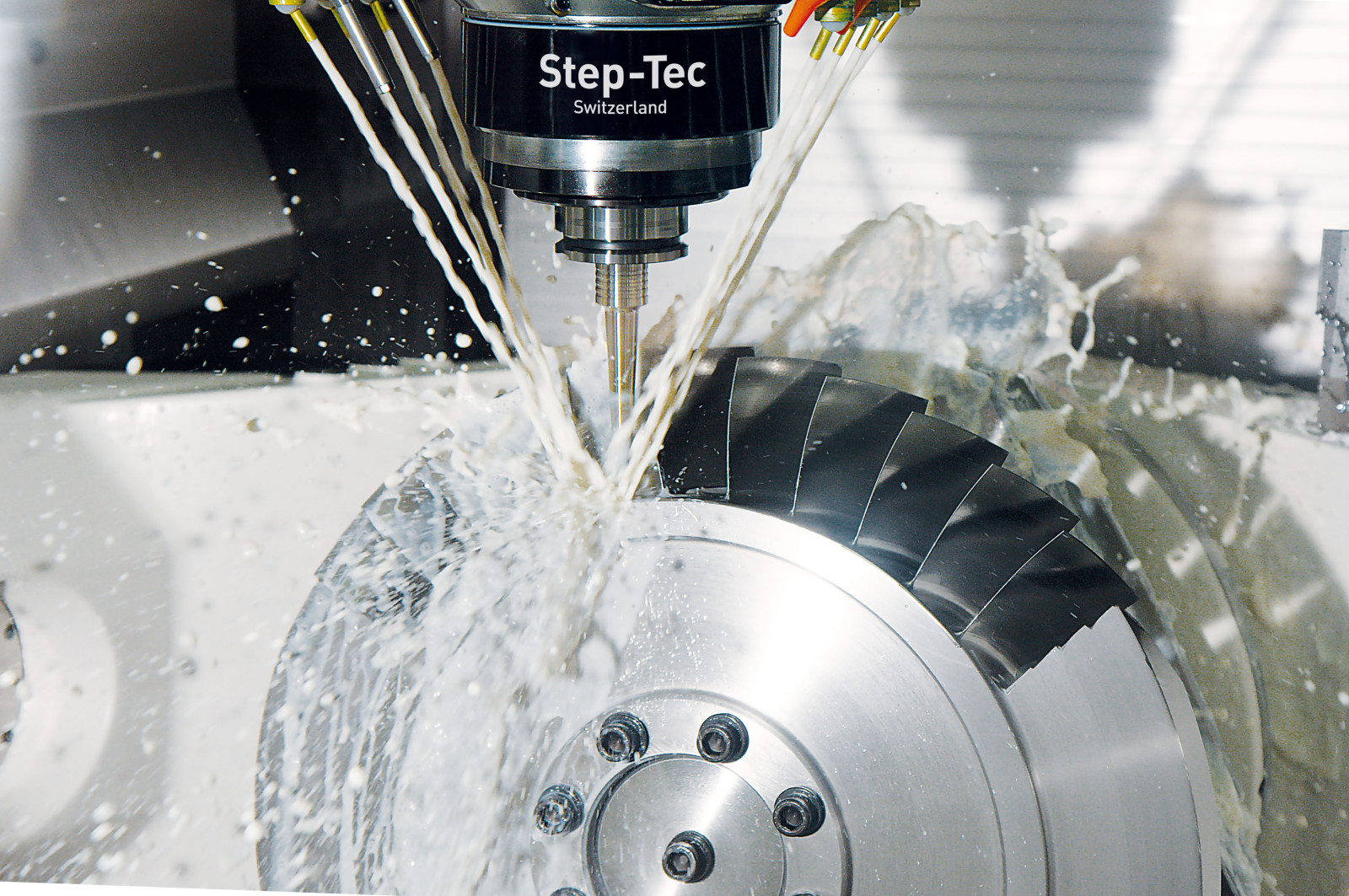
United Machining’s MIKRON MILL P U series is the ideal simultaneous 5-axis machining centre range for complex open, semi-open and closed impeller manufacturing.
With their rigid design and construction, the incorporation of high torque motors, direct-drive STEP TEC spindles, advanced thermal compensation, integrated spindle protection, and advanced calibration systems MIKRON MILL P U series help manufacturers machine complex impellers quicker, faster and more efficiently.
Impeller machining is a precision process typically involving simultaneous 5-axis machining to create complex blade geometries and specialised CAM software and cutting tool technologies, in both roughing and finishing operations, to achieve the hub, fillet and blade profiles required.
The machining of an impeller involves a complex, multi-stage process that demands precision, strategy, and specialized tooling.
The machining process is typically divided into three primary stages: roughing, semi-finishing, and finishing, with each performing a crucial role in processing, sequentially, the workpiece into a high-precision component capable of performing, predictably and reliably, under extreme conditions.
Roughing operations focus on the rapid removal of bulk material and shaping the basic geometry of the impeller.
Semi-finishing refines this shape and prepares the all-important surfaces ensuring their high performance.
Finishing delivers the required surface finish quality and dimensional accuracies, especially important with the thin-walled, complex geometries of impeller blades.
Together, these stages form a structured workflow that ensures both efficiency and high-quality outcomes in impeller production.
Roughing
Roughing is the initial stage of impeller machining process, primarily focused on the rapid and efficient removal of material to establish the basic geometry of the part.
Several strategies can be applied during roughing, including:
• Z-level roughing (multi-pass surface cuts)
• Axial roughing (cuts aligned with the part’s axis)
• 5-axis plunge or “dive” roughing
• Adaptive roughing with toolpath strategies that optimise engagement and reduce tool wear
For impellers, specific roughing techniques often include cavity roughing (i.e., clearing internal spaces such as the hub and channels) and multi-blade roughing, where several blades are machined in a single operation for better tool engagement and time efficiencies.
While surface quality is not the primary goal at this stage, tool orientation in 5-axis machining must still be carefully managed to avoid collisions and ensure consistent material removal. (Inaccurate tool positioning can negatively affect tool life and roughing performance).
Semi-finishing
Semi-finishing is the intermediate step between roughing and finishing.
Its main objective is to leave a uniform and controlled amount of stock material across all surfaces, which is critical to achieving optimal results in the finishing pass(es).
Toolpaths used in semi-finishing often mirror those used in finishing, but with greater step-over and step-down values, as well as increased stock allowance.
This prepares the surface by eliminating large roughing marks while maintaining enough material to avoid air cuts and ensure stable cutter engagement during finishing operations.
In impeller machining, especially on thin and complex blades, tapered ball-nose cutters and end mills are widely used. Their geometry provides increased rigidity, minimising deflection and vibration.
The finishing stage achieves the final dimensional accuracy and surface finish requirements and necessitates precise control over toolpaths, tool orientation and cutting parameters. Z-level finishing, or constant-stepdown contouring, is a commonly used strategy to ensure even surface quality and optimal tool contact.
Finishing impeller blades is particularly challenging due to their complex geometry. Blades are often:
• Thin and flexible
• Tapered or twisted
• Uneven in height from hub to shroud
• Closely spaced
To avoid surface defects and tool marks, the entire blade should be machined using a single uninterrupted toolpath, ideally with the tool vector remaining normal or tangential to the central surface of the blade.
This method reduces abrupt changes in tool movement and helps maintain a consistent surface finish.
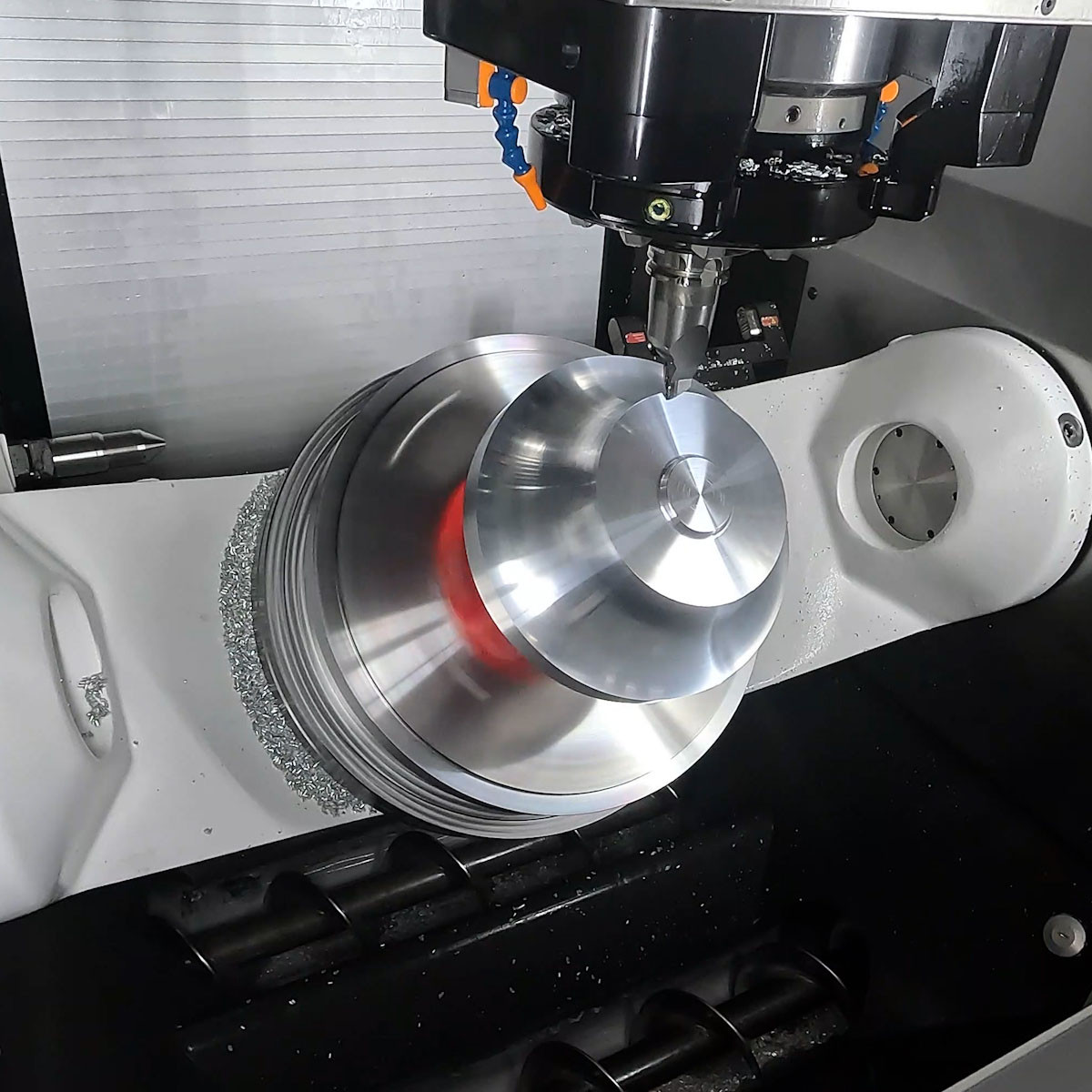 Additional considerations
Maximising the efficiency of impeller machining depends heavily on optimising the roughing stage, as this phase consumes the most machining time and removes the largest volume of material.
Advanced five axis roughing strategies help ensure consistent material removal, minimising sudden tool engagement and producing smoother tool paths.
Effective use of machine kinematics and toolpath planning, such as continuous five axis motion, also reduces the need for part repositioning and improving cycle times as a result.
Overcoming machining challenges with 5-axis MIKRON MILL technology
MIKRON MILL P U (5-axis) machining centres address common machining challenges in impeller production such as complex material cutting, tool wear and high precision.
Machine tool features include torque motors, direct drive spindles up to 120Nm and symmetrical machine designs for unrivalled stability and accuracy.
Other highlights include a range of automation systems that can increase productivity, even with high-mix, low-volume batch manufacturing, and integrated turning capabilities on the MIKRON MILL P 800U for one-hit machining achieved in a single set up.
Ergonomics, compact design and minimal footprint
The machines’ ergonomic design (i.e., layout, configurations. Etc.), enables easy access to undertake maintenance and set-up purposes. Furthermore, their compact and small footprints maximise productivity per square meter of floor space available.
Torque motors add additional benefits
MIKRON MILL vertical 5-axis machines are equipped with torque motors asa standard feature enabling them to undertake the simultaneous 5-axis machining of blade edges.
Torque motors deliver increase rigidity resulting in improved stability and vibration damping. Additionally, torque motors operate without friction, thereby eliminating any possibility of wear and reducing the chances of pitch error or reverse error. This translates into superior accuracy and precision throughout the machining process, whilst also contributing to the longevity of the machine.
Automated Machine Calibration
With Automated Machine Calibration (AMC), the complex and challenging process of calibration becomes effortless. Even operators without specific milling knowledge can successfully calibrate the machine.
The system streamlines the calibration process, reducing the potential for human errors and ensuring consistent and accurate results.
Incorporating advanced algorithms and technology to optimize the calibration process, AMC automatically adjusts key machine components to restore the desired precision and accuracy.
Thanks to its user-friendly interface and automated cycle, operators can efficiently manage data, reducing the time and effort required for calibration.
Machine Spindle Protection (MSP)
Milling crashes between the spindle and the part are a common occurrence, often resulting in spindle breakage, machine downtime, broken tools and scrapped parts and costly repairs.
Fortunately, the Machine Spindle Protection (MSP) system on MIKRON MILL machines helps avoid all these problems.
Strategically located sensors instantly detect a collision and promptly halt the machining operation. In the event of a crash, the machine remains unharmed, preserving its geometry, and preventing spindle damage.
With a brief intervention from a human operator, the machining process can swiftly resume by simply relaunching the job through the CNC interface.
High quality STEP TEC Spindles
MIKRON MILL machines are equipped with high-performance, Swiss-quality spindles renowned for their speed, precision, and reliability.
These spindles deliver exceptional stability at high RPMs, ensuring consistent performance from roughing to finishing, regardless of the material being machined. Whether working with titanium or aluminium, STEP TEC Spindles provide the highest level of performance and efficiency for every machining process.
Summary
The manufacturing of impellers demands a seamless integration of advanced machine tool technology, precise multi-stage machining workflows, and intelligent process optimisation.
The 5-axis MIKRON MILL machines deliver all this and more, providing exceptional stability, rigidity, precision, fast processing speeds and excellent cutting performance.